

Bright indirect light is a spot with plenty of daylight, where daylight reaches the leaves without sunbeams falling straight on them. For indoor plants, the window, nearby shade, and time of day all help decide whether a spot fits.
Quick light check. Look at the spot from leaf height. If it gets plenty of daylight and no sunbeam hits the leaves, it’s likely bright indirect light. Check again when that window gets its strongest light.
I want this guide to help you choose a place for your plant without turning the whole room around. Start where the leaves will sit, then check what the light does there through the day.
What bright indirect light looks like
Picture a plant beside a window, with daylight reaching its leaves while a sun patch falls farther across the room. That can be indirect light. A room can also look bright while a plant on a shelf gets much less light.
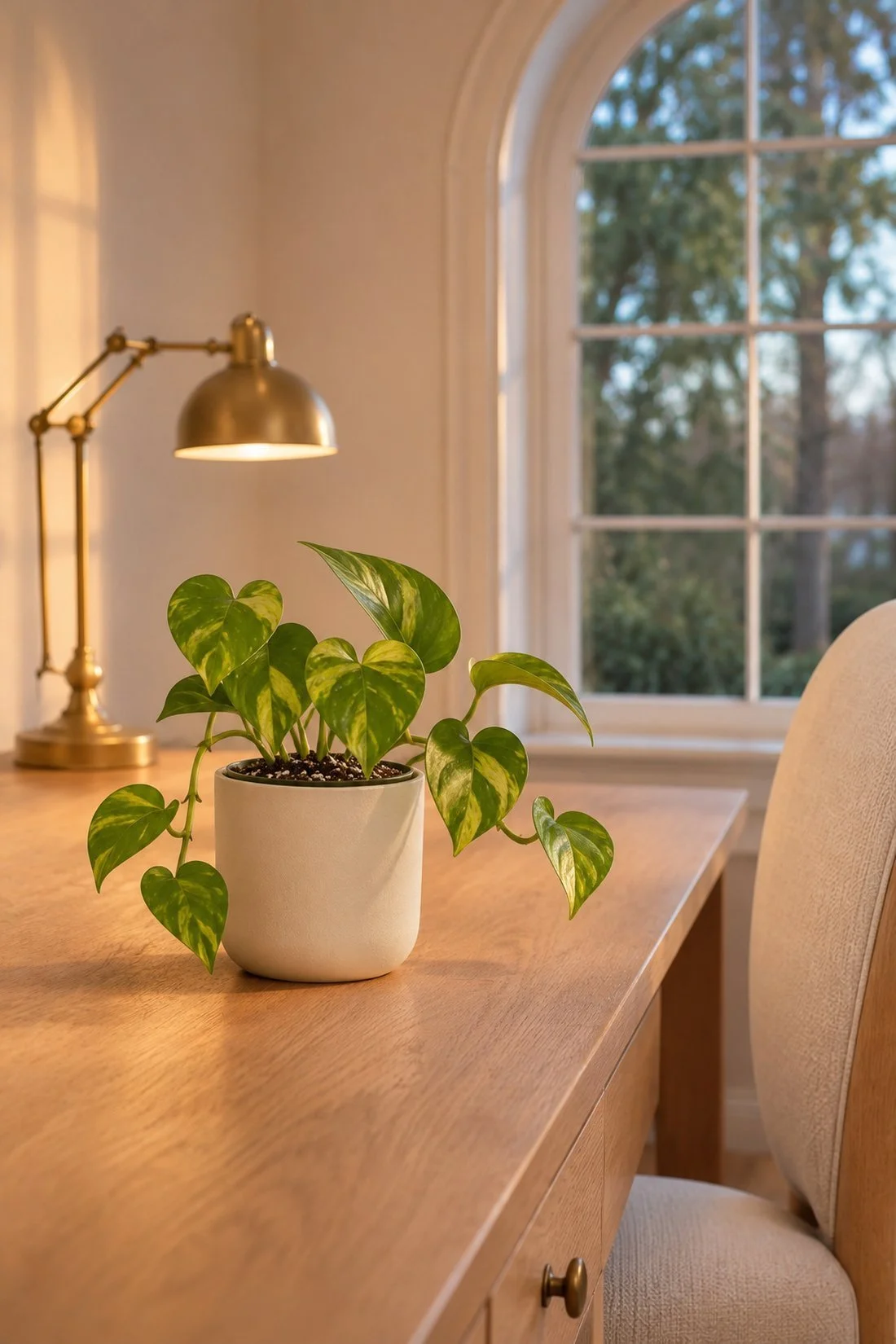
At a desk beside a window, check the light where the pothos leaves sit. A sun patch on the desk can miss the plant entirely.
Look at the plant's spot.
If strong sun lands on the leaves, they are in direct sunlight at that time. Glass alone does not make sunlight indirect. A bright room is a starting clue, rather than proof that every corner has enough light.
Iowa State's houseplant light guide explains the difference between direct sun and bright indirect light. The amount a plant needs still depends on the plant.
Check the window and the hours of light
A window's direction can help you choose a starting spot. In the Northern Hemisphere, south-facing windows often get strong light. East-facing windows may get morning sun. Trees, roof overhangs, nearby buildings, and curtains can change what reaches the room.
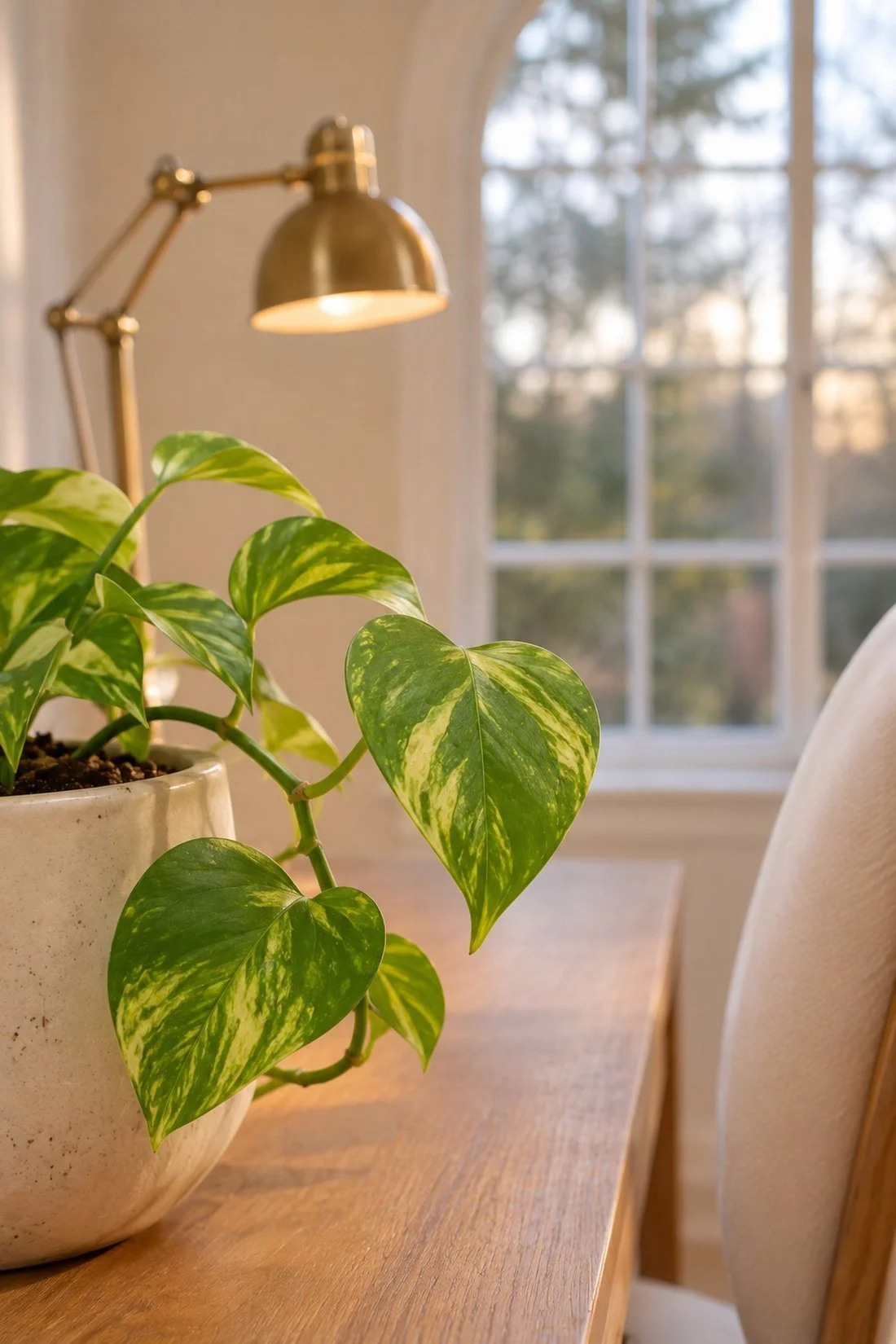
Before moving the pot, check the spot in the morning, near midday, and later in the afternoon. Look for direct sun on the leaves, as well as shade from the room itself.
The University of Minnesota's indoor lighting guide recommends checking both the light and the hours it lasts before choosing a plant. One sunny hour does not describe the whole day.
Find a place that works in your room
Try these places as starting points, then check each one:
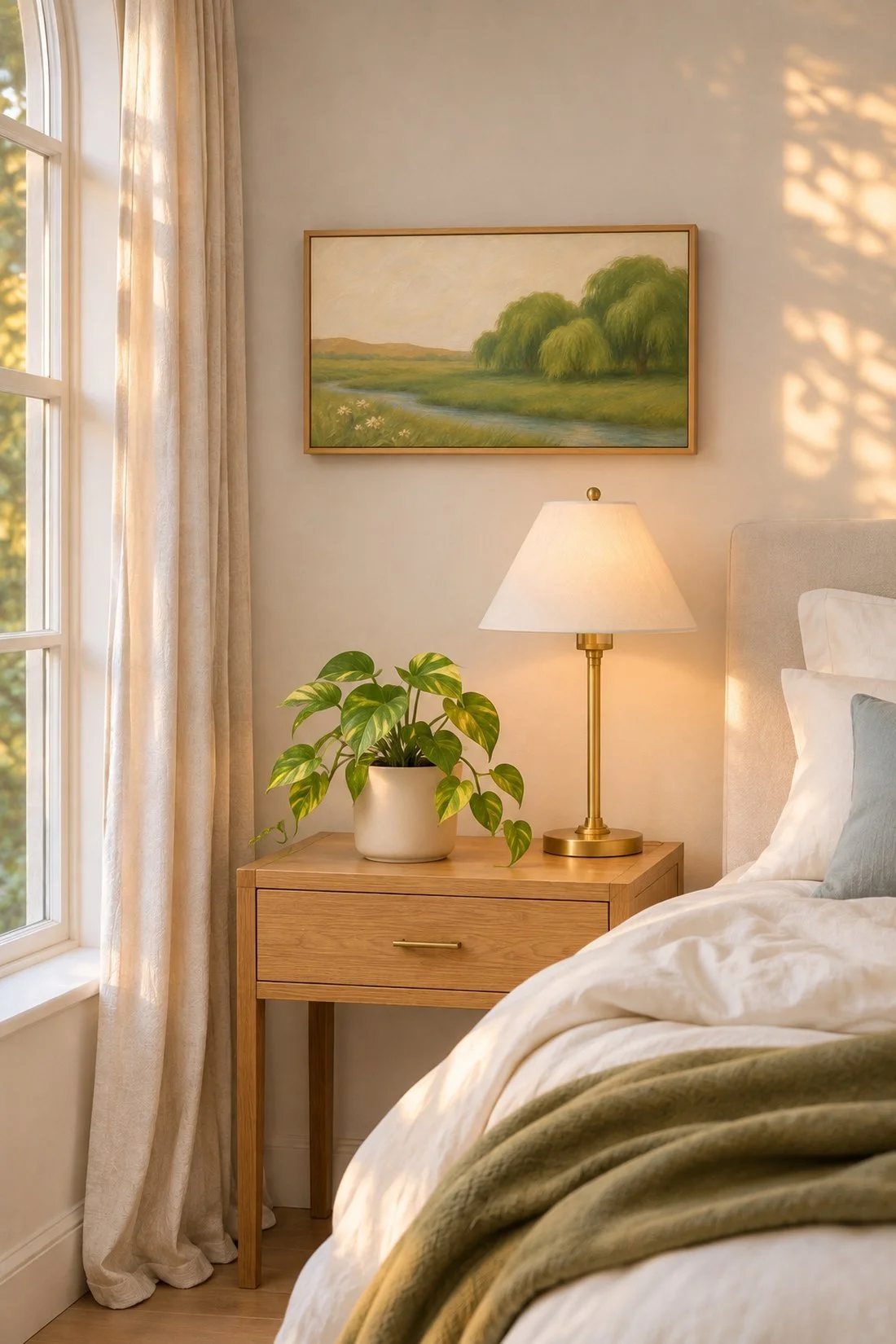
At a nightstand, check the light with the lamp off. Look for daylight at leaf height and watch whether direct sun reaches that spot later in the day.
- Beside a bedroom window: Keep the plant out of a harsh sun patch. Open curtains during the day if they block needed light.
- On a desk near a window: Check the leaves at desk height. The desk lamp does not tell you how much daylight the plant gets.
- On a dining table: Watch how far sunlight travels across the table. A plant may be in sun at one end and shade at the other.
Distance matters. Light drops as you move away from a window. There is no single number of feet that works for every room or plant.
The University of Maryland's plant placement guidance covers distance, curtains, seasons, and outdoor shade. A sheer curtain can soften harsh sun, but it also reduces light.
Use the plant's needs to make the final choice
Before settling on a spot, check the care needs for the plant's name. A plant that can live in lower light may grow more slowly there. A plant that needs stronger light may need a brighter spot or a grow light.
Your eyes adjust to a dim room. That makes it hard to compare two spots by sight alone. If the choice stays unclear, a light meter can help you compare readings at leaf height. Match the readings to guidance for your plant and the meter's units.
University of Florida's guide to measuring plant light explains why the word “bright” can be hard to judge. A photo also cannot prove the light level in a room, since camera settings change how bright it looks.
Check again when the season changes
The same window can give a plant different light through the year. Check the spot again when days get shorter or outdoor trees change their shade. After a move, keep checking the potting mix, too. Lower light can slow growth and water use.
Choose one useful spot, then watch the plant's new growth. You can keep the room you enjoy and make small changes as you learn what grows there.
Questions about indoor plant light
Is sunlight through a window direct light?
Yes, if the sun shines straight through the glass onto the leaves. The window does not turn all sunlight into indirect light.
Does a sheer curtain always give enough light?
No. It filters light, so the result depends on the curtain, window, outdoor shade, and plant. Check the spot behind it through the day.
How far from the window should the plant sit?
Start with the plant's light needs and your window's conditions. A fixed distance cannot account for every home.