If your orchid flowers fell off, the bloom cycle may be finished. Let’s look at the leaves, roots and old flower stem so you can decide what your plant needs next.
This guide is for moth orchids, also called Phalaenopsis. They’re the common orchids with broad leaves near the base and flowers along tall, thin stems. Other orchids can need different care.
Is it normal for orchid flowers to fall off?
Yes. Moth orchid flowers fade and drop at the end of their bloom cycle. When you buy a flowering plant, you may not know how long those flowers have been open. The Orchid Society of Great Britain explains this stage of moth orchid care.
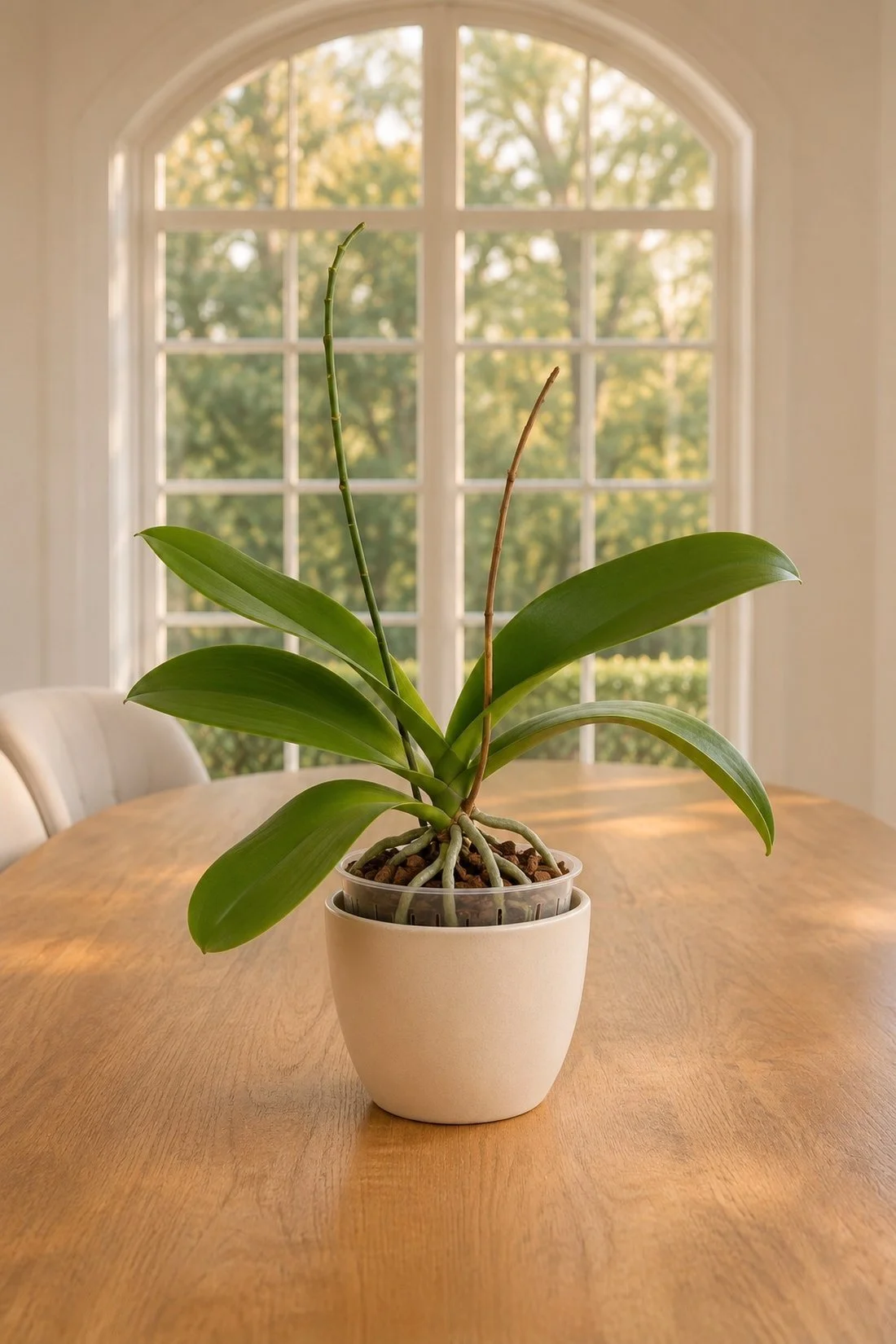
A plant can keep growing after the last flower falls.
Look at the whole plant before deciding what to change. If buds fall before opening, or leaves become soft and yellow, there’s more to check than the end of flowering.
Check the leaves, roots and growing mix
Start at the base of the plant. Look for firm leaves and roots that feel solid. New leaves or growing root tips can give you something to watch between blooms.
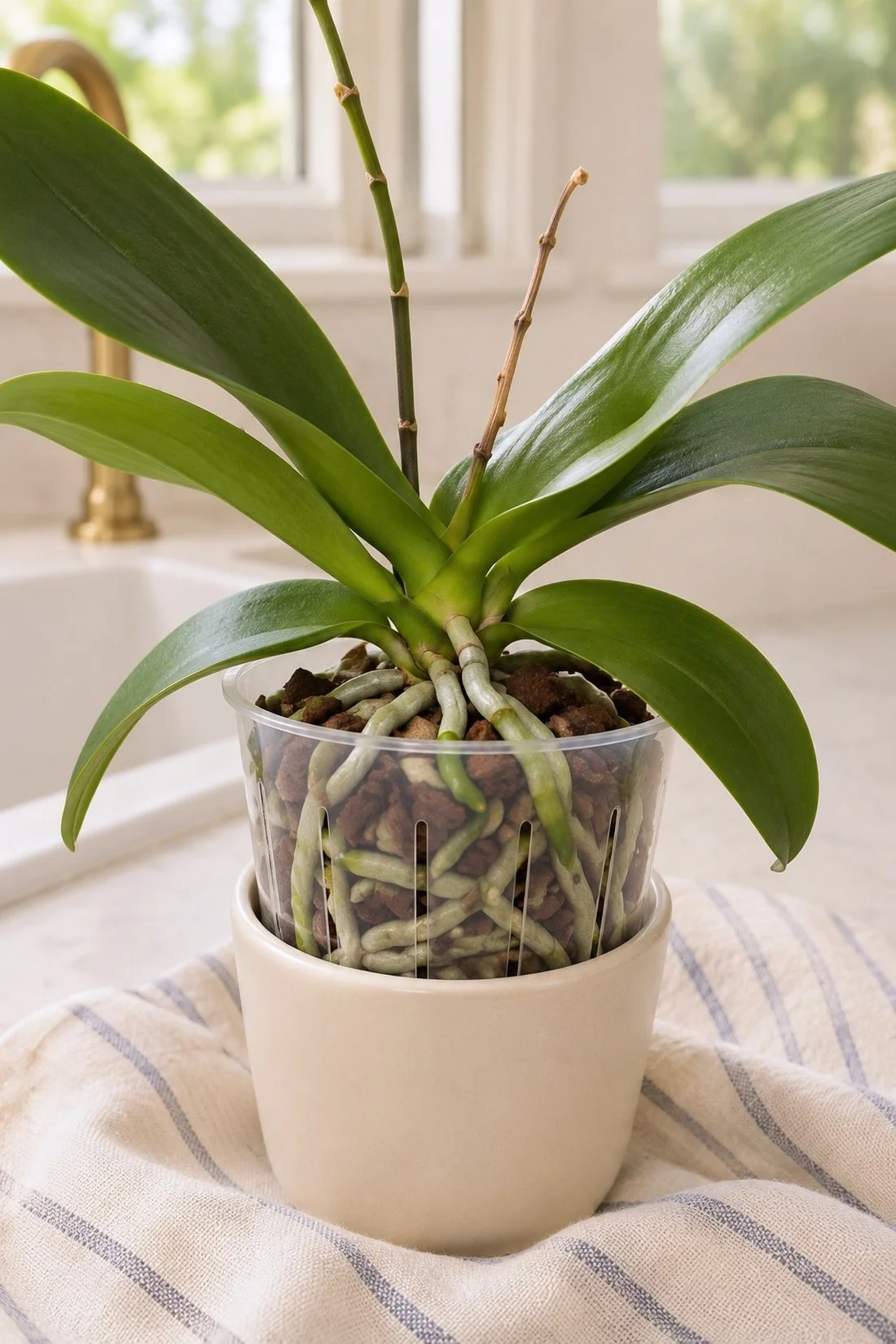
If your orchid sits in a clear inner pot, lift that pot out of its decorative cover. You can see more of the roots and check whether water has collected underneath.
Firm roots can be silvery or green. Soft, mushy roots need attention. Check their feel along with their color. The Orchid Society’s root-care guidance explains what to look for.
Check the mix, too. Loose bark has air gaps. If it has broken down and stays soggy, repotting may be the next step. The American Orchid Society’s Phalaenopsis care sheet covers porous growing mixes and repotting after flowering.
Should you cut the old orchid flower stem?
The tall stem that held the flowers is called a flower spike. Check whether it is green or fully brown and dry.
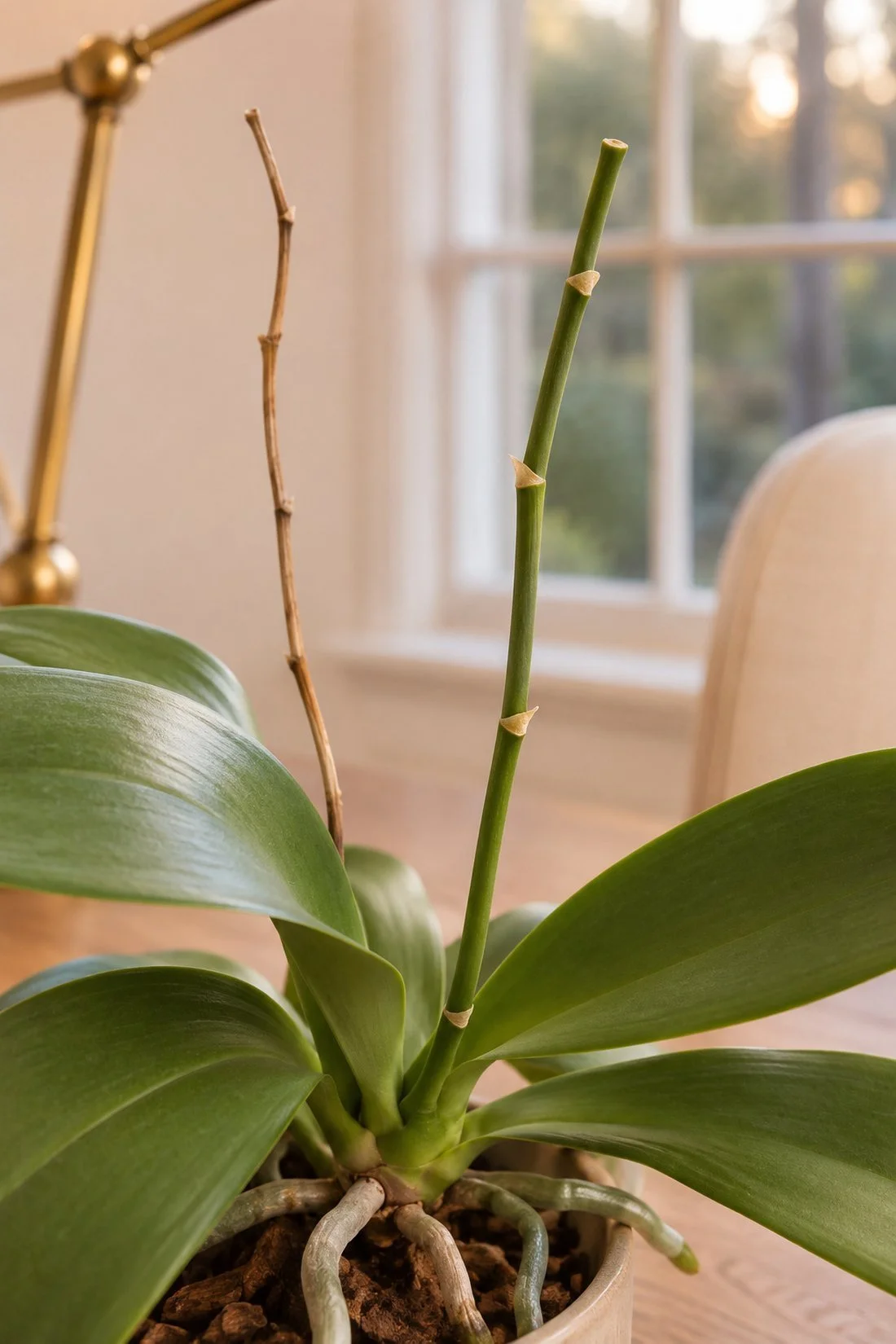
- Fully brown and dry: remove the spent spike near its base with clean cutting tools. Leave the leaves, crown and roots in place.
- Still green: a healthy common moth orchid may flower again from that spike. You can leave it, or choose to remove it so the plant can focus on growth.
- Green with unused nodes: some common hybrids can form a side branch after a cut just above an unused node. A node is a small joint along the spike. This option suits a strong plant.
The American Orchid Society explains the choices for a spent flower spike. It also notes that a second flush can be smaller and can ask more of the plant.
Some moth orchid types flower again from the tip of a green spike. Keep a green spike when you’re unsure which type you have.
Keep watering after the flowers fall
Your orchid still needs water between blooms. Check its growing mix before each watering. For a moth orchid, the mix should be nearly dry before you water again.
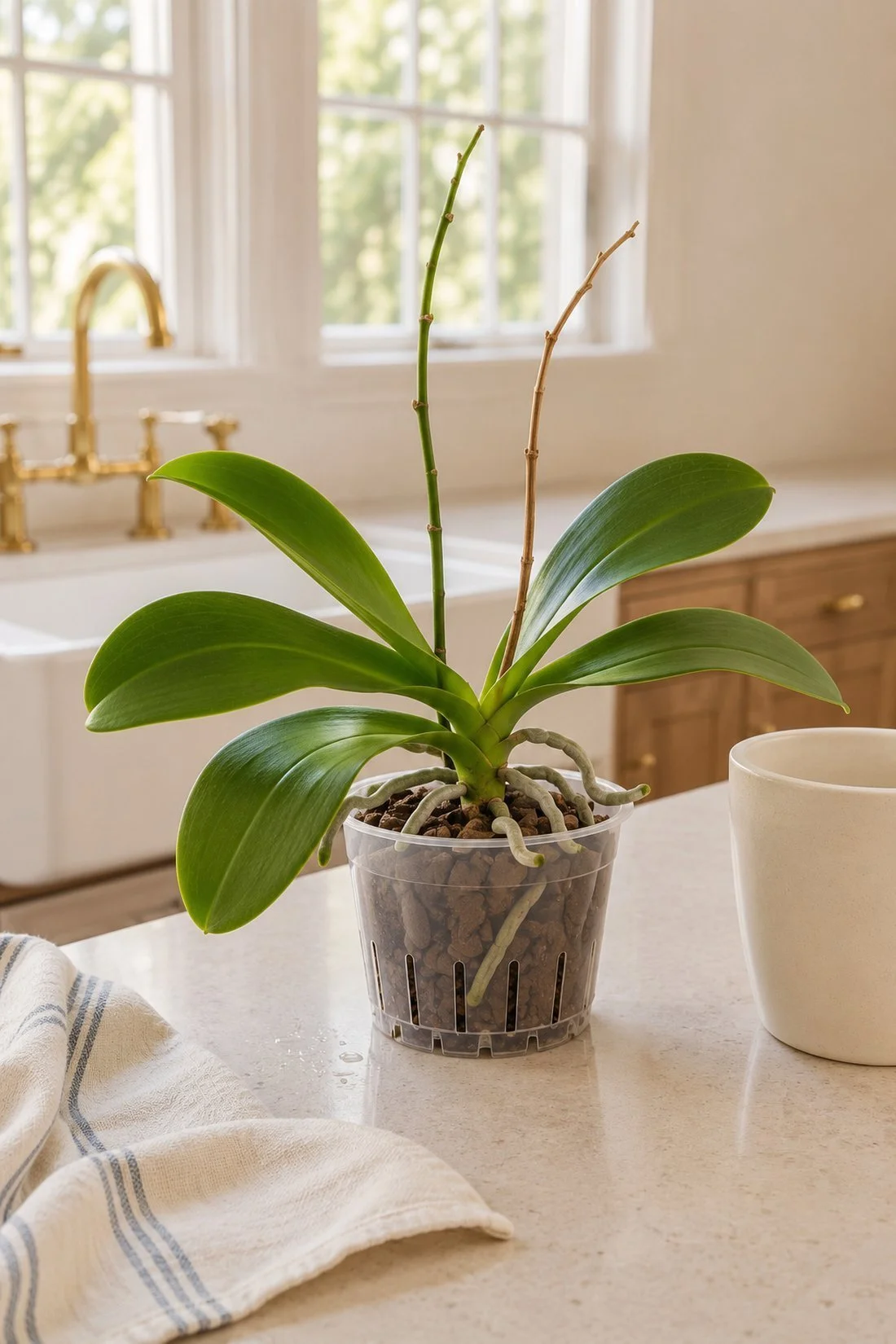
Bark and moss dry at different rates. The New York Botanical Garden’s moth orchid watering guide explains why the potting mix, heat and season change the timing.
When the mix is nearly dry:
- Take the inner pot out of its decorative cover.
- Water the mix thoroughly with tepid water.
- Let the excess drain out.
- Empty the cover pot before putting the orchid back.
Keep water out of the center where the leaves meet. Check the plant again before the next watering, even if the same day of the week has come around.
Give the orchid light while it grows
Keep your moth orchid in bright, indirect light. A bright window with light filtered through a sheer curtain can work. Choose the spot for the plant’s needs as you plan a cozy corner at home.
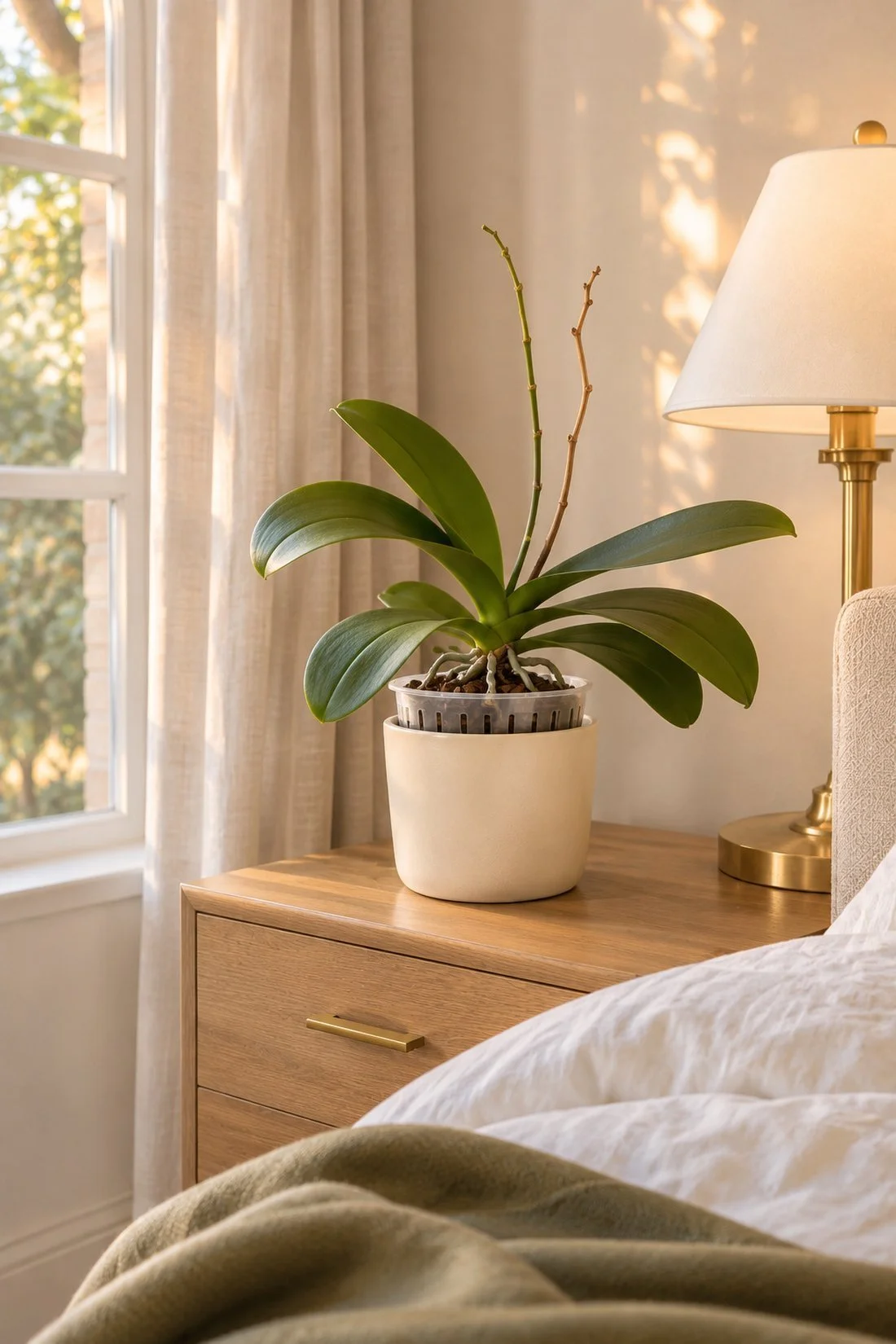
Between blooms, follow new leaves and roots. The next flowers can take months, and the timing varies with the plant and its growing conditions.
Questions about orchids after flowering
Is my orchid dead if all the flowers fell off?
Flower loss alone does not mean the plant is dead. Check the leaves, crown and roots before judging its health.
Should I stop watering an orchid after blooming?
Keep checking the mix and water when it is nearly dry. The leaves and roots still need care.
Can a brown flower spike turn green again?
A fully dry, brown section is spent. Check for any green growth before deciding where to cut.
Do I need to repot as soon as the flowers fall?
Check the roots and mix first. Flower loss alone does not mean the pot needs changing.
Will my moth orchid bloom again?
A healthy moth orchid can bloom again with suitable care. There is no fixed date for the next flowers.
For today, start with one plant check: look at the roots, feel the mix, and see whether the old flower spike is green or brown.