Working With Lupus: How I Hold Down a Job and a Life
When I was diagnosed with lupus, it was really validating. I had an explanation for my fatigue, pain and other symptoms.
I also had no idea how I was going to keep working. At the time I couldn’t hold my camera anymore. It would take 4 days to recover from one photoshoot. How was I going to work?
If you are asking that same question, I know how isolating it can be to live this out. I also know that this is likely not the last time you will be asking yourself this question. I think it’s part of the ongoing journey with any chronic illness.
Working while being sick is challenging. It is also possible but for me it has taken systems and strategies. There are times I’ve overdone it and ended up in the hospital and because of that I’ve learned a lot about what to do and what not to do for my own health.
At the same time, I am learning each day. Those closest to me — the ones who watch me day-to-do — often see what I need to learn before I do. I have a tendency to push, push, push through all of the inconveniences with lupus.
So here’s is my honest middle when I am not going to pretend I have it figured out. I am still learning it and here are some things that I have halfway figured out.
Yes, you can often still work
Plenty of people work with lupus. The trick is building a work life that fits your body instead of fighting it. That might mean a flexible schedule, working from home, fewer hours, or a different kind of job than you pictured. None of that is giving up. It is being smart with the energy you have.
Start by being honest with yourself about your capacity on an average day, not your best day. Plan for the average. The good days become a bonus instead of the bar.
That’s a new, hard reality to accept but really important for you in the long run.
Managing fatigue at work
Fatigue is the part that gets underestimated. It is not regular tired. It is something that cannot be fixed with rest or sleep. Here is how I work with it instead of against it:
Do your hardest task during your best hours. For me that is usually the first of the day so I try to get these things done first.
Take breaks before you crash, not after. Sometimes, a ten-minute rest at 10am saves the whole afternoon.
Sit when you can. Keep water and a snack close. Small things add up.
Lower the bar on the days your body says to. A B-minus day on your checklist isn’t the same as B- work.
Asking for what you need
This was the hard one for me. Asking for help feels vulnerable for me. It still feels vulnerable for me because I know I will not be able to repay what is given to me. So I’ve made it a rule that if someone offers to do something for me, I do everything I can to say yes.
As long as it is healthy for me and my family and works with my boundaries, I really try to say yes.
Sometimes this means that the other person bails or when it comes down to it they simply cannot do what they had offered. That’s okay. No big deal.
But I have to tell you that I have been so shocked by what people have done for me and my family in our most challenging times simply because they offered, I said yes, and they just made it happen.
Asking for what you need at work
If you have an employer, you may be able to request accommodations: a flexible start time, the option to work from home, a quiet space, or a schedule that bends on flare days. You do not have to share every detail of your health. You can say what helps you do your job well.
Practice the words ahead of time so they come out calm. "I do my best work when I can start a little later" is a good start. This is a really tricky balance and I’ll be really candid that I don’t have a lot of experience with the corpoorate world. I run a business and lead a team so I can talk to you about this from a leadership standpoint but I’ve learned that not everyone in leadership is accommodating or helpful.
It’s important to be careful what you disclose with certain people because it can be used against you and I know a lot of people who have lost jobs because they needed accomodations. Yes, I realize that is supposed to be protected but it truly is complicated and a lot of times people don’t have the energy or resources to fight for justice in this way.
Build a little support around you
You were not meant to carry this alone. A few things that help:
Find your people. Chronic illness support groups, online or local, remind you that you are not crazy and not alone.
Tell one person at work you trust. A single ally changes everything on a bad day.
Keep a flare plan ready so you are not making decisions while you feel awful.
Where my strength comes from
I would be leaving out the truest part if I made this only about tips. On the days my body fails me, the thing that steadies me is that my worth was never tied to what I produce. It doesn’t mean that I have this part down and never have to give myself a peptalk.
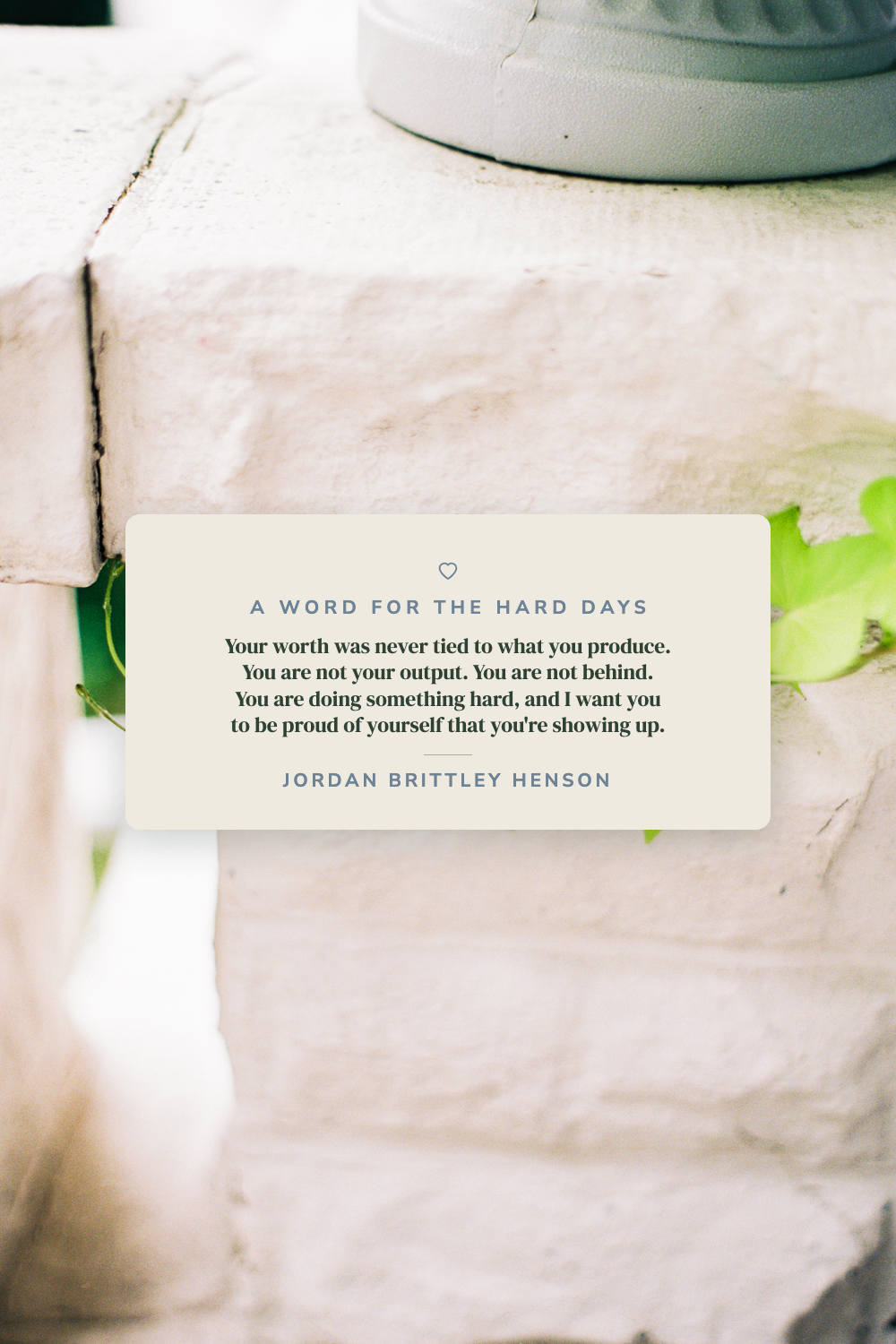
You are not your output. You are not behind. You are doing something hard, and I want you to be proud of yourself that you’re showing up.